
Full-Stack Engineering
Full-Stack Engineering
Full-stack engineering across .NET, Java, JavaScript and open source: bespoke enterprise applications architected for reliability, performance and long-term maintainability.
Overview
What this service delivers
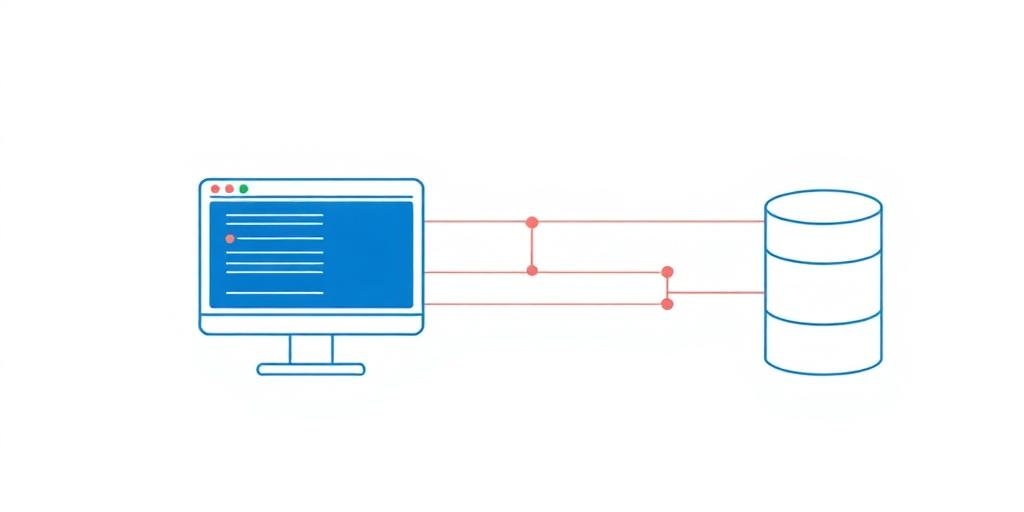
Packaged software rarely matches how an enterprise actually works. We build applications around your real workflows and connect them to the ERP, CRM, billing and legacy data you already depend on, using API-led integration rather than brittle point-to-point links.
Delivery follows our CMMI-DEV V2.0 ML5 appraised process: documented requirements, reviewed designs, automated builds, independent QA gates and a controlled release path into production.
Our Offerings
Where we plug in
Pick a single capability, or combine them into one accountable engagement. Scope, team shape and commercials adapt to your roadmap.
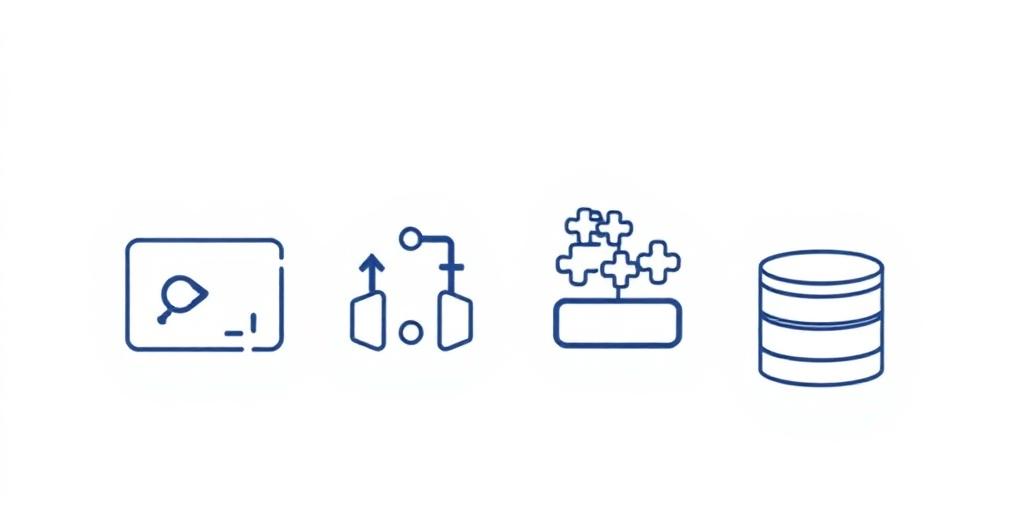
Enterprise applications
Line-of-business systems for operations, finance, HR, field service and regulatory reporting.
API-led integration
Gateways, message queues and event streams that connect systems without hard-wiring them together.
Database engineering
Schema design, tuning, replication and migration across SQL Server, Oracle, PostgreSQL and MySQL.
Workflow automation
Approval chains, document routing and rules engines that remove duplicate manual work.
Portals & self-service
Customer, partner and employee portals with role-based access and single sign-on.
Application maintenance
Enhancement backlogs, patching and performance care once the system is live.
Our Expertise
Technology depth behind the service
Certified engineers, architects and QA specialists working across the stack, backed by reusable accelerators from 16+ years of enterprise delivery.
Languages
Data
Integration
Delivery
Research
Research
The hard part of enterprise applications is rarely the screens; it is the data and the systems around them. We profile the source data, prove the integrations with real payloads, and confirm non-functional targets before design is frozen.
- Data profiling and quality assessment on the actual source systems
- Integration proof of concept against ERP, CRM or billing sandboxes
- Non-functional baseline: concurrency, volumes, retention, audit needs
Concept & Ideation
Concept & Ideation
Custom application work begins with the workflow, not the wireframe. We sit with the people who do the job today, capture every exception and approval they handle, and agree which of those rules the software should enforce, which it should suggest, and which belong outside the system.
- As-is process capture including exceptions, approvals and workarounds
- Signed-off functional scope with traceability to business rules
- Integration inventory: which systems must exchange which data, and when
Design & Development
Design & Development
We build on layered, testable architecture, clean separation between domain rules, data access and interface, so the application stays changeable years later. Reference implementations exist for .NET and Java stacks, which removes weeks of scaffolding.
- Layered solution architecture with reusable, reviewed reference patterns
- Role-based UI, SSO and fine-grained authorization from the first sprint
- Database design with migrations, seed data and versioned schema changes
Test Engineering
Test Engineering
Enterprise applications fail at the seams, so that is where we concentrate. Integration and data-migration testing get as much rigour as functional testing, with independent QA signing off against the traceability matrix before UAT opens.
- Requirement-to-test traceability matrix maintained through delivery
- Integration, batch-job and reconciliation testing with production-like data
- Regression automation, security testing and structured UAT support
Re-Engineering
Re-Engineering
We regularly take over ageing in-house systems written in unsupported frameworks. The approach is to freeze the legacy scope, rebuild it module by module with parallel running, and reconcile outputs daily until the business trusts the new numbers.
- Reverse-engineering of undocumented legacy logic into written rules
- Parallel run with automated output reconciliation and variance reports
- Phased data migration with rollback plans and cutover rehearsals
Support & Reliability
Support & Reliability
Once live, the application moves into an AMS model: a named support pod, a monthly enhancement allowance, and SLAs that separate outages from routine change requests so genuine incidents never queue behind wish-list items.
- Severity-based SLAs with distinct paths for incidents and enhancements
- Scheduled patching, dependency upgrades and performance reviews
- Quarterly technical-debt and security assessment with a fix backlog
Documentation & Training
Documentation & Training
Because these systems are often audited, documentation is a deliverable in its own right: functional specifications, data dictionaries, interface contracts and change history kept current for every release.
- Functional specifications, data dictionary and interface contracts
- Administrator, super-user and end-user training with role-based guides
- Release notes and change history retained for audit evidence

Why Nectar?
Why enterprises choose Nectar for complex application engineering
We translate real workflows, integration constraints and audit requirements into maintainable applications that your teams can operate and extend for years.
Built around your real workflow
We capture the exceptions and approvals people handle manually today, then decide deliberately which the system should enforce.
Integration-first architecture
API-led connections to ERP, CRM, billing and legacy data replace brittle point-to-point links that break at every upgrade.
Audit-ready by default
Requirement traceability, versioned specifications and retained release history give auditors the evidence they ask for.
Named architect on the account
The architect who designed your integration layer is still there when the next system needs connecting, so context is never rebuilt from scratch.
Secure development lifecycle
Threat modeling, dependency scanning and access review are steps in the pipeline, not a penetration test discovered late.
Handover you can act on
Source, specifications, environment definitions and runbooks transfer to you at close, so another supplier could pick the system up.
Portfolio
Relevant work
Selected engagements where we delivered this capability end to end.

AI/ML
Machine Learning-Based Accounting Software for AM/NS
Auto reconciliation of customers' and vendors' statements using ML.
Read case study
Database
DB & Virtualization Support, Integration & Maintenance
DB & VMware services that help gain competitive advantage and address next-generation IT challenges.
Read case study
Software Development
Integrated Digital Payment System with Digital Security
A simplified system to manage end-user e-wallet transactions.
Read case studyReady to start your full-stack engineering initiative?
Book Your Free CallRelated services

Microsoft 365 Services
Microsoft 365 migration, security configuration and adoption support for the whole tenant.
Read moreDigital Marketplace
A platform for packaging, selling and managing digital services, with catalogue, ordering and billing built in.
Read more
Mobile Apps Development
Native and cross-platform mobile apps for Android and iOS, designed, built, tested and shipped to the stores.
Read more